Showing posts with label Scott O'Donell. Show all posts

Thursday, December 13, 2012

Nara gets the top job

Prak Sovannara - back at the helm of the national team
As expected, the federation have today announced that Prak Sovannara will take over the reins of the Cambodian national team as head coach for the forthcoming AFC Challenge Cup qualifying group matches in the Philippines in early March. Sovannara has resigned as head coach at NagaCorp, where he took charge in March 2010 after a stint with Preah Khan Reach, and will be joined by a backroom team of assistant coaches Meas Channa, Ieng Saknida and goalkeeping coach, Prak Vanny. The newly-appointed coach has been in the hot seat before, for a year from July 2008 and has been number two as well. I've always found him to be one of the most knowledgeable people in Cambodian football and as the reporter for the Phnom Penh Post, I interviewed him on numerous occasions. The following post shines a light on the career of Prak Sovannara and appeared on my blog on 18 March 2009.

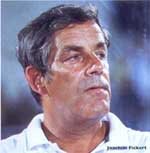
I recently chatted to Prak Sovannara about his own career as a player and coach before becoming the Cambodian national team coach midway through last year (2008), and the first surprise is that he's just 36 years old, making him one of international football's youngest coaches. Born in November 1972, he made his debut for his country at 21, retired from playing at 27 to concentrate on coaching and took on the national team hot-seat last year at the tender age of 35. He's Cambodia's only Asian Football Federation A-licence qualified coach, coaching at junior, youth and club level before taking the top job after Korean coach Yoo Kee-Heung was sacked. Sovannara is quick to single out the influence of Joachim Fickert, whom he played under in the national team when the German coached the Cambodia side during the 1990s. "I learnt so much from him, about organization, tactics as well as how to handle players on and off the pitch, " he said.

Sovannara's playing career began at 17 for the Civil Aviation team in the 2nd Division. As a wide right-sided midfield player, he combined football with his sports teacher studies before joining the more-fancied Division 1 Royal Bodyguard team in 1993 - a move to a club that swept all before them in the top flight of Cambodian football during his half a dozen years there. 1993 also saw him make his international debut against a visiting USSR U/19 team, at the age of 21. It was in 1995 that Cambodia, with Sovannara as a regular in midfield, took its first tentative steps back into re-establishing its international presence. They took part in the SEA Games in Chiang Mai though their years of isolation clearly showed, conceding 32 goals and scoring none in their four matches. A year later, with Fickert now at the helm, they took part in the Tiger Cup in Singapore, where they lost all four games, in the SEA Games in the Indonesian capital of Jakarta in 1997, where they won twice and narrowly missed the semi-finals, and finished third in the Presidents Cup in the Philippines the same year.

1999 was a watershed year for Sovannara. In the SEA Games in Brunei, he was to play the last of his international matches for Cambodia, as well as parting company with his successful club side. He passed his B-licence in coaching that year and decided that coaching was where his future lay. He was 27 years old. Though he'd been involved in coaching schools and junior teams, he now moved up a notch, as assistant coach to the national youth team for the next three years, before another step up, this time as assistant to the new Cambodian national coach Scott O'Donell for a couple of years. In 2006 he tasted a year in charge of club side Phnom Penh Empire, leading them to runners-up spot in the Cambodia Premier League before returning to coach the national youth team at U/17 level. Seemingly groomed for the top job in Cambodian football and definitely the best-equipped homegrown coach, Sovannara was the man the FFC turned to after the departure of Yoo Lee-Heung and following a few early forgettable results, he gained immediate success by guiding the country through qualification to the finals of the AFF Suzuki Cup. The next challenge will be to qualify for next year's AFC Challenge Cup finals with success in Bangladesh next month, as well as a good showing at the SEA Games in Laos at the end of the year. It won't be an easy task but Sovannara has shown he's prepared to take on that challenge, as he continues to shape and define his youthful squad.

That was the end of my blog post but I think its worth also noting the details of Sovannara's previous spell as the national team coach, which ended in June 2009 when Scott O'Donell returned to lead the team as head coach: Prak Sovannara took over as Cambodia's national coach in July 2008 after a string of poor performances under the former South Korean coach and the forecast looked bleak when a three week stint of practice matches in South Korea, produced losses in six of eight games to university and domestic teams. Not easily deterred, Sovannara, who played for the national team in the 1990s and who has coached domestic side Phnom Penh Empire and the national youth team, also cast aside crushing friendly defeats, 7-1 to Myanmar and 7-0 to Indonesia, to put some fire into the belly of his players for the AFF Suzuki Cup qualifying tournament held in Phnom Penh last October. With wins over Laos (3-2) and Brunei (2-1), a draw with Timor Leste (2-2) and a loss to Philippines (2-3), his youthful Cambodian team, with an average age of 22, qualified as runners-up for the finals. This was a real success for the fans and players alike to rejoice in, exemplified by the whole squad running to throw their shirts into the 15,000 crowd at the end of the qualifiers. In the December finals Cambodia came unstuck against Singapore (0-5) and Indonesia (0-4) and narrowly lost to Laos 3-2 but could hold their heads high in competing at the senior level of Asean football. In April 2009, he took his young squad to Bangladesh for the AFC Challenge Cup group stage and narrowly failed to qualify, beating Macau 2-1 but losing to Bangladesh and Myanmar, by a 1-nil scoreline on both occasions. He relinquished control of the squad when O'Donell returned. In a dozen international matches under his control, he won three games, 1 draw and eight defeats, goals for 14, goals against 37.

Monday, September 10, 2012

Lofty ambitions

Scott with some of India's youth players of the future
Scott O'Donell is currently working for FIFA in India, guiding that country in developing their players of the future. If the Cambodian football federation had got their act together he could've been doing the same for Cambodian football.

O'Donell Excited by Indian Potential (FIFA.com)
Scott O’Donell has a big job on his hands. Appointed in November 2011, the 45-year-old Australian is FIFA’s Technical Director of regional academies in India, a vital position in reviving Indian football in the short- and long-term and in building a competitive national side for the 2017 FIFA U-17 World Cup, a tournament the country is aiming to host. “I’m setting up regional training centres, which involves identifying candidates, selecting them and training the coaches,” he said, explaining his duties. “The Mumbai centre opened in May, in Bangalore the kids are arriving right now and the programmes getting under way, and we’re just about ready to get going in Kolkata.
“That means we’ll have three centres up and running this year, with five others scheduled to open next year along with the country’s first elite academy, where the national U-16 team will be based.”

O’Donell ran out for several clubs in Asia in his 16-year playing career, which ended in 2000, at which point he devoted his energies to coaching. As well as taking charge of Cambodia’s national team and being named Singapore’s coach of the year in 2003, he has worked as a FIFA instructor and a coaching course director for the AFC. Proving his ability in the process, he was then handed a new brief by FIFA, one that visibly excites him. His first task is to select young candidates for the academies. It is a vital job and not without its difficulties: “There’s talent all over India. There’s no doubt about that. The thing is you have to be able to pinpoint and find players, and that’s where the Indian states can help an awful lot. They choose the players and we come along and select the best ones. We had tried to do it all ourselves, but when we went to Kolkata 1,400 youngsters turned up. There were only three of us and it was an impossible job.”

Scouting key for success
From the off O’Donell has been trying to set up an efficient regional scouting network. “The scouting process in each state has to be effective for the academies to be a success. It takes time but I’m convinced it’s the right way.” As he went on to explain, he is pursuing more than one objective: “The first goal is to raise standards. As far as we’ve been able to see, Indian football’s weaknesses are a lack of technical skill and a low standard of play. I’ve watched youth matches and the central defenders are happy just to clear the ball, as are the goalkeepers. It’ll take time but we’re trying to put the emphasis on building play from the back and on possession, because that style of play is better suited to the size and stature of Indian players, who aren’t the biggest.”

The short-term aim is to build a competitive U-17 team for 2017. Though that deadline is only four years away, there is a very well thought-out plan in place for achieving it. “Next year we’ll have three academies with 19 players born in 1999 and two academies with 19 players born in 2000,” explained O’Donell. “The latter group could form the basis of the team that could well play in the FIFA U-17 World Cup in 2017 on home soil. After that we’ll have another four academies of players born in 2000, which will give us an even bigger pool for putting a competitive team together.” The challenges he faces are also considerable. Aside from the problem of detecting players, infrastructures and the training of coaches are two other key areas.“Take states like Goa or Mumbai, for example, where you need to have artificial pitches because you can’t play on grass at all during the monsoon season,” he commented, before explaining that there is also a need to change mindsets among coaches. “Some of the older coaches are authoritarian and frighten the youngsters, who often freeze and choose to clear the ball and not make a mistake. We want the opposite. We want young players to feel at ease, to take risks and be creative. That’s something we’ve made a point of stressing in our coaching courses.” Other obstacles include the difficulty of ascertaining players’ ages due to the fact that births are not always registered, and the near-total absence of youth players at the clubs competing in the I-League.

An ambitious Australian
Undaunted, the Australian has lofty ambitions and would ideally like his academy teams to play at least one competitive match a week, for grassroots football programmes to grow and make the work of scouts easier, and for other private academies to work together more closely. Whatever the concerns and frustrations he faces along the way, O’Donell is deriving genuine satisfaction from his job and is full of hope for the future: “It’s a real pleasure to work with young Indian players. They are disciplined, do everything you ask them to, and they listen. They really want to improve. When we started to work on the principle of keeping possession, you could see straightaway that they enjoyed it more and that they welcomed it. They learned very quickly.”

Though there is no question of him getting carried away with himself, O’Donell’s eyes start to twinkle when talk turns to the future, five years and beyond. “If India does host the U-17 World Cup, it will be a huge source of motivation for players, coaches, staff and administrators alike. It would be a great opportunity for the players, and would allow us to recruit more Indian coaches and to create better working conditions etc. It’s very exciting because it would give everyone a medium-term goal to work towards, not to mention a long-term one, because these players could well go on and form the team that will fight it out for a place at the 2022 World Cup.”

Tuesday, January 3, 2012

Scott's Indian summer

Scott O'Donell in coaching mode
Former Cambodian national coach and advisor to Phnom Penh Crown, Scott O'Donell has begun a new chapter in developing youth football... in India. As the newly-appointed National Academies Manager, O'Donell will lead a joint project between football's world governing body FIFA and the All India Football federation to set up regional academies and an elite academy over the next two years. For phase 1 of the project, four residential regional centers will be set up in Bangalore, Kolkata, Mumbai and Delhi by the end of this March. "We will be selecting the players from the U-14 national festival as well as other trials to be conducted. There are already some private academies in India and a few clubs have their own but the quality varies," commented the Australian coach. Each academy will house about 30 boys and they will undergo a two-year stint in the regional academy where accommodation, food and education will be funded by the AIFF. The next phase, by March 2013, will see academies in Goa, Chennai, Chandigarh and Kerala come on board. The elite academy will be take boys from the age of 16 from the regional centers for two years before they become eligible to join professional clubs. This focus on developing youth football in India is a determined attempt by the Indian football federation to take their football to a new level in the future. O'Donnell, who had two stints as the national coach for Cambodia as well as a successful coaching spell at Geylang United in Singapore, is also a FIFA coaching instructor and pundit on ESPN/Star Sports. He will be working closely with the Dutch technical director at the AIFF, Rob Baan. O'Donell is no stranger to developing grassroots football, having worked closely with Bouy Dary to set up the Phnom Penh Crown Academy last year.

Friday, June 10, 2011

Keeda on Scott

Former Cambodian national team coach Scott O'Donell was recently interviewed for the sports website Sports Keeda. Here is the interview:

Interview: Former coach Scott O''Donell on football in Cambodia - by Renato Andreoa

Managing the national team of Cambodia presents a unique set of challenges. For enthusiasts of the game interested in knowing about the challenges and explore about football in the small South East Asian nation of Cambodia, there is no better man to talk than Scott O’Donnell. A former footballer for Australia, O’Donnell was at the helm of the Cambodia national team for a twin span that lasted 4 years. When Sportskeeda’s Renato caught up with the former Cambodia manager, O’Donnell spoke about his past as a footballer, mainly in Singapore where he played in the first edition of the Professional Football League, and matters in Cambodia.

How do you analyse your experience in Cambodia?

It was rewarding and frustrating at the same time. I enjoyed working with the players and my coaching staff, but after the President Ravy Khek left Cambodian Football Federation (CFF), it was increasingly difficult to get the support from CFF. With very little development taking place it was always going to difficult for any coach to achieve any kind of success as the players are not taught the basics – tactical and technical aspects of the game – at a young age.

Do you rate the work of ex-President Ravy Khek as good at CFF? What are your impressions about Cambodian football directors?

Ravy has not been involved with CFF for a few years now. I have no further comment to make about CFF.

What is the atmosphere like in the Cambodian League? There are many Africans playing in Cambodia. Do you think it is positive for development of Cambodian football?

Football is by far the number one sport in Cambodia. There are many Africans playing in the local league, unfortunately the quality of these players is not great. I doubt most of them are Professional players as many are no better than the local players. So I don’t think the majority of the current crop of players are helping to develop the game in Cambodia. If the clubs were able to sign experienced, quality professional foreign players, then I think it would undoubtedly help the development of the game in Cambodia.

What are your memories from the first Singaporean Professional Football League editions in 1996 and ’97?

I played for four years in the S-League. The first year was amazing with the amount of publicity, press and TV coverage and good crowds. Those were very exciting times to be playing in Singapore. There were some very good foreign players and the atmosphere was great. Unfortunately that is no longer the case. The interest in local football has evaporated and I have to say that the quality of foreign players leaves a lot to be desired compared to 1996.

Singapore has vision and organization and Malaysia has big crowds and passion. Where did you enjoy working as player and coach the most?

Even now Malaysia is struggling with crowds. Only Selangor, Kelantan and Terengganu manage to get good crowds these days. I enjoyed playing in both Singapore and Malaysia. Both nations are very passionate about football. Obviously playing in front of big crowds in Malaysia was great from a player’s view point. I think it is very difficult at present in Singapore to compete with the likes of the EPL and UEFA Champions League. Most people prefer to watch those leagues instead of the local ones, but I think Football Association Singapore (FAS) are doing the best to try and turn things around. But for that to happen they need the support of the clubs as well.

You played in Singapore against two all-time goalscoring greats in the S-League: the Brazilian Egmar Gonçalves and the Croatian Mirko Grabovac. Which of them was the more difficult opponent?

They were both very different players, both very good. I marked some very good strikers in Australia and Malaysia too. Egmar was a very consistent player for so long for Home United FC. He was strong and had the knack of being in the right place at the right time to score so many goals. We enjoyed some good battles on the field but I think there was mutual respect between the two of us. Mirko Grabovac was a different player to Egmar. Probably technically more skillful than Egmar but not as physical or mobile, but still a very good striker.

We sincerely thank Scott O’Donnell for his valuable time and thoughts and wish him the very best of luck in his future endeavours.

The Asian travel website Travelfish, well known for dishing out useful advice has turned its attentions to football in Cambodia. Visit their website to find out more on watching football at the Olympic Stadium here.

The BIDC Cup, which aroused such passion when it was hosted at the Olympic Stadium in 2009 and won by the Cambodian U-23 team under the former coach Scott O'Donell, is heading back to Phnom Penh this coming October. Though the full details are not yet clear, six countries have been invited to participate with teams, to include Cambodia (with the Cambodia U-23s using it as a prelude to the SEA Games in November), Vietnam, Laos, Myanmar, China and Thailand.

Tuesday, April 12, 2011

Interview with Scott O'Donell


Former Cambodian national football coach Scott O'Donell, who is now advisor to Phnom Penh Crown, shares some of his views on Cambodian football with Antony Sutton, who runs the popular Jakarta casual football blog from Indonesia. Antony is a football nut and should be coming to Phnom Penh to watch some C-League games in a few months time. You can read his blog here. Scott splits his time these days between Phnom Penh and Singapore, where he regularly works as a pundit with the ESPN and Star Sports television channels.

Sunday, November 14, 2010

Online interviews

PPC coach Bojan Hodak keeps tabs on his new team
I've tracked down a couple of online football interviews. The first is with new Phnom Penh Crown coach Bojan Hodak, from June 2008, when he was the subject of the focus by Malaysia's Star Online. Click here to read more. The second is with former Cambodian national coach Scott O'Donell who was recently talking to Australia's NineMSN. You can read the interview here though the most telling comments relating to Cambodian football are as follows. "I didn't think the federation were serious about the development of football, and in particular the apparent lack of interest in the national team," O'Donell said. "They are getting left behind the rest of the region and they will not catch up until they focus on developing the youth players from an early age. Countries like Singapore, Vietnam, Malaysia all have relatively successful youth development programs which involve giving the kids opportunities to play regularly and receive qualified coaching from a young age. Cambodia has done very little in regards to youth development." I'm pleased to report that Phnom Penh Crown are doing their bit to begin a serious tilt at youth development with their Elite Football Academy undergoing its final trials this weekend. From tomorrow, PPC will have 22 under-13 players ready to start on their journey to becoming professional footballers.

Thursday, July 22, 2010

Coaching Cambodia

Scott and his backroom team and substitutes line-up for the Cambodian national anthem
This article on former Cambodian football coach Scott O'Donell appeared in the July edition of the Fah Thai magazine, the in-flight mag for Bangkok Airways.

Coaching Cambodia - by Antony Sutton, Pictures by Andy Brouwer

When the Cambodian national football team lines up for Nokoreach – the national anthem – their Australian coach Scott O’Donell feels a pride that comes from having a strong, emotional bond to the country. Unlike many expatriates whose attachment to their temporary home is whimsical at best, O’Donell has a part of him that is as Khmer as the temples of Angkor and the waters of the Tonle Sap.

O’Donell’s football career started with a number of New South Wales State League teams where he made his mark as a rough and ready defender. From an early stage in his career he was open to plying his trade overseas and at 21 he was recommended to the Napier City Rovers team in New Zealand, where he spent a short time on loan. For an impressionable youth from Sydney, it was an exciting opportunity to play alongside Brian McAllister and Johnathon Gould; sportsmen who had played at the highest level in England.

Soon enough he found himself back in Australia as Raul Blanco – who he admits was “the best coach I played under” – saw enough potential to sign him for the National Soccer League (NSL) and O’Donell enjoyed several seasons in Sydney’s Western suburbs playing his part in one of the most attractive teams in the League. Football in Australia was very much a minority, part-time sport. O’Donell combined football with a teaching job and also coached the school team. With an eye to the future, he continued to work hard and slowly started acquiring his coaching badges.

His ambition for the game was far too great for him to remain in Australia and he was adamant to make it his profession. However, he wasn’t alone. Opportunities Down Under were limited and some of the biggest names of the time could be found playing in both Malaysia and Singapore. In 1994 he finally got the chance to join Kuala Lumpur. A few years down the line, he moved to Singapore. Living and working in the Lion City, he met a number of people who adopted Cambodian children and that got him, and his wife Margaret, contemplating over the idea. After making exhaustive enquiries in 1998, they decided to visit Cambodia for the first time and set in process the wheels for adopting themselves. They visited a number of orphanages in the city and met with relevant government departments before returning home victorious with an adopted daughter, Emma. Twelve months later Ellie was adopted and their Singapore home was filled with two bubbly toddlers.

In 2005 Scott returned to Cambodia. He had been coaching Geylang United in Singapore when the Cambodian Football Federation approached him and asked if he would like to take over their national team. “I have to say that I am very proud to be the national coach of the country where both of my daughters were born. I feel it is an honour,” he says. As for his plan for the team, O’Donell’s goals are realistic and long term. While most of the world are gearing up for the World Cup in South Africa, the coach is working hard to lead Cambodia on the road to the next World Cup, Brazil 2014, when they have their first qualifiers in October.

There is also the small matter of regional pride at stake in the ASEAN Football Federation Cup. Cambodia, one of the lower ranking nations in the grouping, will have to fight it out with East Timor, Brunei, Laos and the Philippines for the right to mix with regional powerhouses like Vietnam, Thailand, Malaysia, Singapore, Indonesia and Myanmar, who have all previously secured the title. Work takes Scott all over the country scouting for young talent who can make the step up to the national team and one thing that stands out is the positive attitude of the young sportsmen. O’Donell marvels that while “We do not have the resources to prepare like most of our opposition, they have pride in playing for their country.”

As for his family, the O’Donells stay based in Singapore with constant trips to Cambodia and Christmases spent in Sydney. It’s a global lifestyle and one his daughters have adapted to. And while the two girls may not be “tossing a shrimp on the barbie” or dancing the ramvong in their spare time, they have their feet placed firmly in both cultures and the O’Donells are keen for that to continue.

Monday, July 19, 2010

Korean in the frame

A new face will be on the bench for the Cambodian national team very soon, to replace Scott O'Donell (center). Photo: nicksellsphotography
I have it on good authority that the new Cambodian national football coach will be announced fairly shortly, certainly in good time before the AFF Suzuki Cup qualifying tournament takes place in October. More on the Suzuki Cup later. The new man at the helm will definitely be from South Korea, or the Korea Republic as its recognised by FIFA. There's no name in the frame yet as the Cambodian football federation are waiting to hear from their Korean counterparts as to who they are putting forward as their chosen candidate. The agreement between the two countries also goes higher than the two federations and the appointment will reflect the growing friendship between the Cambodian and Korean governments. In addition, South Korea will be paying the new coach's wages. There is also a determination by the FFC to get the backroom staff in place before the new coach is appointed and that is also taking shape.
It won't be the first time that a South Korean has taken charge of the national team. Yoo Kee-Heung was hired as the coach in December 2007 as part of a sponsorship deal but he was fired seven months later after a string of poor results and the discovery that he wasn't suitably qualified. Homegrown Prak Sovannara, currently in charge of league leaders Naga Corp, was the next to take on the job for a year before Aussie Scott O'Donell returned for his second spell in June of last year. Scott decided not to stay longer than his one-year contract hence the need for a new coach. The Suzuki Cup qualifiers will be in Laos during October where Cambodia will battle alongside Laos, Philippines and Timor Leste for two spots in the finals, to be held in Indonesia and Vietnam in December. With the Metfone C-League due to come to a close at the end of August, the new national coach will have the month of September and half of October to prepare his squad for the qualifying matches. Two World Cup qualifiers were also originally due to take place in October, but have been put back to the middle of 2011. I await developments with interest.

Friday, May 28, 2010

Khmer language only

Star of the Week - Khim Borey
A couple of items in the Khmer language only Sports Today edition, which is included in the Khmer version of the Phnom Penh Post every Friday. Every week I select a Star of the Week from the previous week's football matches and it gets printed in Khmer language only. This week it was Khim Borey and the picture shows how it's presented each week, as part of a two page spotlight on the Metfone C-League. In addition, on the back page of Sports Today there was a whole page focused on recent developments regarding the departure of Scott O'Donell as coach of the Cambodia national team. It included comments from players and fans about the situation, for and against. I've only had a very rough translated summary so can't really comment on it, suffice to say that football fans will always have their views, and that's what makes football the fascinating sport that it is.
Have your say about recent developments, in Khmer language only

Wednesday, May 26, 2010

Beggars belief

There's a story on the back page of today's Phnom Penh Post that effectively gives the Cambodian Football Federation's so-called response to remarks made by Scott O'Donell when I interviewed him recently regarding his decision not to stay in the job at the end of his contract, which finishes this month. In it, May Tola, the FFC spokesman implies that Scott didn't understand how the federation works and was unwilling to work around the complications of arranging friendly international matches. In essence, it's a face-saving piece from the FFC who are now looking to get a South Korean coach on the cheap, or failing that, a local coach. To be frank, it beggars belief. If the FFC were professional and passionate about the national team, they would've bust a gut to support a coach that clearly knows his stuff and had presented a plan of action for the 10 months leading up to crucial games in October. They have failed miserably in their duty to the national team and if the spokesman's thinking pans out, they may play a friendly or two in the month prior to the series of cruicial matches in October, that have World Cup and Suzuki Cup qualifying as their goal. He also stated that there is no desperate pressure to get a new coach. If that is their idea of suitable preparation then there is absolutely no hope for Cambodian football in the international arena in the foreseeable future. They can make all the excuses they like about a 'crowded domestic programme' and 'problems with resource mobilization' but they are simply inept excuses that won't cut the mustard with anyone that has a brain. The Cambodian players and the Cambodian public deserve better.
The article here in the PPP is by H S Manjunath, an Indian sports journo who is in the country for a few months and doing some freelance work for the Post. He was reporting for them on the day that Wilson Mene died at the Olympic Stadium.

Thursday, May 20, 2010

Press talk

Today's back page of the Phnom Penh Post is dedicated to the decision of Scott O'Donell not to seek a renewal of his contract as the coach of the Cambodian national football team. Such a shame. The story is online here.

Wednesday, May 19, 2010

O'Donell walks away from top job

Outgoing Cambodian national football coach Scott O'Donell
It's all change again at the head of Cambodia's national football team as coach Scott O'Donell announces he's leaving at the end of this month, after the end of his year-long contract. This exclusive breaking story will appear in Thursday's Phnom Penh Post. Read it here first.

Australian coach Scott O'Donell will not be renewing his contract with the Cambodian national football team and will officially leave his post at the end of this month. His 1-year contract that began on 1 June last year, and which heralded his second stint in charge of the nation's footballers, took in the BIDC Cup, which Cambodia hosted and won, and the SEA Games in Laos, where they lost three games and won the other.

Speaking exclusively to the Post, O'Donell, 43 next month, confirmed; "My contract is due to expire at the end of May and I gave a letter to the Football Federation last month stating that I didn't want to renew." When asked to expand on his decision, he confided; "It's pretty obvious that the Federation has different ideas to what I feel is in the best interests of the national team. I gave them a proposal for the national team's training programme in December last year and they don't agree with what I think is best for the team. There's no point in me staying in the job if we're not thinking along the same lines. I've got a good relationship with the President and the Vice-President and it's okay that they have different ideas, it's just that I strongly believed in what I proposed and that's not going to happen."

Looking back over the past year, O'Donell had this to say. "Obviously winning the BIDC Cup was a high, it was perfect preparation for the SEA Games, we got everyone in Phnom Penh behind the team, 35,000 people watched the final and produced a great atmosphere, but I think we lost a wonderful opportunity to build on that." He continued. "We went to the SEA Games, came back with some positives and then played one meaningless friendly against a Korean university team and then that's it. We lost a great opportunity to keep the crowd supporting the national team by not having done anything since that friendly in January."

He admitted, "it's been a rather frustrating last few months because I haven't been able to do what I wanted to do with the national team. I've said it since I first arrived here in 2005 that it's important for the team to be playing regular international games and getting international exposure for the players. That hasn't been the case. There are World Cup and Suzuki Cup qualifiers in October and I don't think what is happening is in the best interests of the national team in respect of preparation for those tournaments."

Cambodian Football Federation deputy general-secretary May Tola confirmed that O'Donell's letter had been received and that the Federation were now considering their options. "We've made some informal moves towards the Korean Football Federation about bringing in a South Korean coach, but we are still open-minded whether Scott's replacement will be a foreigner or a Cambodian. We have a long-term relationship with Korea so its natural we see if they have any candidates," he stated.

Tola revealed that the Federation were planning a programme of international matches after the end of the Metfone C-League in September, just a month before they begin vital World Cup 2014 qualifying games and AFF Suzuki Cup matches. "It's difficult to plan international friendly games as the clubs and players are playing each weekend until September."

O'Donell offered up this view of his tenure. "I would like to think in my time here that I've improved the professionalism of the team and the players, in terms of preparation and training methods and I think there's been a slight overall improvement in the performance of the team. There's some good young players coming through, but at the end of the day, the coach, the team and the country is judged by their results and the fact is that we won one game and lost three in the SEA Games."

He continued. "We are still getting similar results because we're still doing similar preparation. It all comes down to the preparation and regular access to international games, regular exposure for the players to play international football. I've said it time and time again, the standard and quality of the local C-League is way below that of international football, so if players aren't playing international football regularly, they get dragged down to the standard of the local league and it's not what's required for international football. It's not just in Cambodia that we have these problems, but that's why the better teams in the region play regular international friendly matches to give their players the exposure. We can't keep on doing what we've been doing, we keep getting the same results, so we've got to change. And that's something I've been trying to make happen."

O'Donell, whose earlier spell in charge of Cambodia's national team lasted two and half years and began in July 2005 before a stint as director of coaching education with the Asian Football Confederation, is now considering his own future, with a couple of offers already on the table, though nothing has been confirmed. "My family and I will be here for the forseeable future and I will continue my television work in India and Singapore with ESPN. I'll be going to Mumbai in India for the duration of the World Cup to work for the Times Now channel, previewing and reviewing every game of the World Cup."

In a parting look at the future shape of Cambodian football, O'Donell identified three key areas that needed attention. "There's got to be a structured youth development programme in place so we have a conveyor belt of players coming into the system; coach education is vitally important, we have to continue educating our coaches and the Federation is working on that now, running courses last year and this; and finally, we have to have decent facilities for the players to train on. If we get those three things in place its a good start, but it's a long-term plan, there are no short cuts in the development of football."

He also spoke about the promising young players in the C-League today. "There's a few good young players coming through the national team right now and the Army are a good example to all. They stuck with their young players and though they didn't win anything at first, they are now reaping the fruits of their labours. They've stayed together, grown together and there would be more players from the Army than any other team, if I picked a national team line-up today, which wasn't the case two or three years ago."

Thursday, April 29, 2010

AFC.com on Cambodia's future

Keo Kosal, in the colours of Preah Khan Reach, where's he's responsible for youth development
This article on Keo Kosal, a member of the Preah Khan Reach squad and already looking to become a top coach in the future, is reproduced from The AFC.com website and is penned by Tan Boon Piaw.

Keo dreams of bright future for Cambodia
He is relatively unknown in Asian football but, in Cambodia, the name of Keo Kosal raises great hopes for the future. The 24-year-old midfielder is pursuing his dream of taking the Cambodian national team to the last four stage of a major competition - preferably as a player but if that is not possible, even as a coach.

Cambodia's best international performance was fourth at the 1972 AFC Asian Cup when they were known as the Khmer Republic from 1970 to 1975. Now a lowly 171st in the FIFA World Rankings, they are among the weakest teams in the world and did not even attempt to qualify for the 2006 FIFA World Cup. Keo, with his competitive attitude, may be the one to change his country's fortunes. He hates to lose. The pain is especially bad when the national team are eliminated from a tournament, whether it is a regional ASEAN Championship or the continent’s flagship competition AFC Asian Cup. "I am just 24 and still an active player for my club and country. I wish to break this jinx before I retire as a player," he told www.the-afc.com. "If I am not able to make it, I hope I can carry on this mission when I become a coach in the future. Even if I don't become the national coach, I will still do my part to develop quality players for The Royals," said Keo, who is currently playing for the Royal Sword FC, also known as the Police Military team.

This is why Keo is among a select band of young coaches chosen for the AFC's Project Future programme, being part of the 2008 batch. Keo has represented Cambodia since 2004 when he was an 18-year-old. He is now the pillar of the team under the guidance of Australian Scott O’Donell, a former Director of the AFC Coach Education Department. An ex-Cambodian Army player, Keo led Khemara to the 2006 AFC President Cup semi-finals for the first time in Kuching, Malaysia. That grab-and-win feeling was so satisfying that it is etched firmly in Keo's mind. "No one likes to lose. I have experienced the sweet feeling of qualifying for the (AFC President Cup) semi-finals with Khemara before and I am very hungry for more success. The Cambodia national team deserves better and we have the ability to achieve something in the future," Keo said.

Keo certainly has big plans for Cambodian football. Although still primarily a player, he wants to learn as much as he can about coaching in order to serve his country beyond his playing days. "I must start young, the sooner the better. I know where I am heading and I need to get myself ready in advance," he said. "AFC's Project Future is a great long-term project and it will definitely help to kick-start my coaching career. I am honoured to be part of this project, which could be the platform for me to achieve something extraordinary in the coming years," said Keo, who is also studying for a Bachelor in General Management from the Phnom Penh Build Bright University. "In fact, I am also holding the role of youth development coach in my club. I think this job will help me understand more about what it needs to be a coach," he added.

Similar to AFC's 'The Future is Asia' motto, Keo believes that in Cambodia 'The Future is Youth'. He is dreaming to produce more players such as Hok "Jet" Sochetra - Cambodia's all-time greatest player who scored 42 goals in 64 internationals. Said Keo: "I strongly believe that the future of Cambodian football depends on the youth. I am involved in grassroots and youth development work in Royal Sword FC and there are many talented youngsters. I need to turn these youngsters into professional players. This kind of foundation work might take at least 10 years for fruition but I am willing to take up this challenge."

Keo is hoping to be O’Donell’s successor in the future. "Scott is a great coach who I admire very much. He teaches me so many things, from behaviour and discipline on and off the pitch, individual skills to tactics, fitness and detailed planning. I would like to become who he is after I hang up my boots. Even if I am not able to realise my dream of taking over the reins (of the national team), I will not give up on my country’s football. I will try my best to coach in Asia's top clubs, upgrade my knowledge and gain more experience. When I come back (to Cambodia) one day, I will surely teach and share with my colleagues what I have learned abroad. I believe this is the right way for Cambodian football to move forward," said Keo.

Wednesday, March 17, 2010

Scott in S'pore

Cambodia's national team coach Scott O'Donell has been back to Singapore for the last few days to work on the ESPN STAR Sports channel as a pundit and analyst for the weekend's Barclays Premier League matches as well as teaming up with Andy Penders on the Tiger World of Football programme that aired tonight. Scott has been a member of ESPN's team of football pundits - which includes Paul Masefield, Shebby Singh, Jamie Reeves and Steve McMahon amongst others - for almost a decade covering the Premier League and also working for ESPN's SportsCenter Asia programme, all of which come from their studios in Singapore, one of Scott's former home cities.

Tuesday, March 9, 2010

Match Fixer - book review

If you have any interest in Asian football at all, you must get a copy of Neil Humphreys' debut novel, Match Fixer. Even if you can't stand football - yes there are some people like that out there - but fancy a really good read immersed in the exotic Far East then Match Fixer will provide that too. Just treat the football as incidental. Humphreys has lived in Singapore, has worked in sports journalism and has put the two together to produce a riveting read, which will be on sale at Monument Books on Norodom Boulevard next week.
I thought that the best person to review Match Fixer would be someone who has played football in Australia and Singapore (as the lead character in the book did), who's worked in the media and who knows Asian football inside out. Step forward Scott O'Donell, the national football team coach of Cambodia, who kindly penned the following review after reading through Humphreys' new novel:

Match Fixer by Neil Humphreys

Neil Humphreys has taken me back in time with his latest offering, Match Fixer.

Having played and coached in Singapore, Match Fixer was something that I could obviously relate to. Humphreys' intimate knowledge of Singapore and in particular the S-League, is an entertaining and somewhat disconcerting view of life as a professional footballer through the eyes of failed West Ham Reserve team player Chris Osborne.

Having failed to make the grade at West Ham, Osborne ended up in Singapore via Australia to ply his trade in one of South East Asia’s newest football leagues. While enjoying success and being the new superstar of the S-League, Osborne gets entwined in a complex web of drugs, karaoke lounges and bookies.

It was his presence at a party of a well known foreign publisher that he found himself caught in a situation that proved very difficult to get out of. As you will discover, his honesty and unwillingness to co-operate with the bookies very nearly cost him his career.

The characters in Match Fixer are people all of us who have been involved in football anywhere in the world can relate to: Danny Spearman, the failed ex-pro from UK, Billy Addis, the expat journalist and Yati, the beautiful Sarong Party Girl. All of whom contribute to this fascinating tale of football and Singapore’s underworld.

While this piece of fiction is a must read for anyone looking for an entertaining and fascinating novel, anyone who has been involved in football in South East Asia whether as a spectator, a player or a coach will be able to relate to it.

Scott O'Donell

Thursday, March 4, 2010

Q&A with tribalfootball.com

Scott O'Donell
TribalFootball.com has an interview with Cambodia's national football coach Scott O'Donell online today. The interviewer is Andrew Slevison.

Q&A with Cambodia national team coach Scott O'Donell
The Australian football public would not know much about Scott O’Donell. The 42-year old New South Welshman is a former player who represented a few NSW Premier League clubs in and around Sydney before making the move to Malaysia as a 27-year old. Since then has played in Malaysia and Singapore and is currently in his second stint as head coach of the Cambodia national football team. tribalfootball.com caught up with O’Donell to discuss certain aspects of his footballing life along with the status of football in Asia and upcoming plans for the Cambodia team, otherwise known as The Royals.

tf.com: How did you get over to Asia in the first place? Was it purely for football or were you also interested in other things such as the culture, lifestyle etc?
SO’D: I first went to Malaysia in 1994. I had always wanted to play football full-time. At the time I was playing for Parramatta Melita in the NSL (National Soccer League) and teaching economics and business studies in Sydney’s western suburbs. When the opportunity came, I jumped at it. I was coached by former Chelsea player and manager Ken Shellito at Kuala Lumpur and had a relatively successful season. Parramatta loaned me to KL for the season and I came back to play the last few NSL games in 1995 under Washington Gonzales. After Parramatta were subsequently kicked out of the NSL for the 95/96 season, I signed for Tampines Rovers FC for the inaugural S-League season in Singapore.
I played for four seasons in Singapore before getting my coaching licenses back in Australia before commencing my coaching career at Geylang United. After Geylang, I was offered the Cambodian national coaching position in 2005. I jumped at the chance because my two daughters (Emma and Ellie) were adopted from Cambodia and we always intended to try and go back and live there one day, so it worked out well.

tf.com: Can you identify the major differences between football in Australia and football in Asia, predominantly in Cambodia where you are based now and in Malaysia and Singapore where you played?

SO’D: There is no doubt that the football in Australia is a lot more physical. The level of professionalism has also greatly improved compared to the old NSL. The A-League is light years ahead of the NSL. Technically, I don’t think there is a big difference between the better players in South East Asia and Australia. Professional football in Cambodia is in its infancy. We have a professional league and have foreign players but the standard is fairly average. Having said that, the competitiveness and the quality is slowly improving. A lack of youth development in years gone by certainly hasn’t helped.
Malaysian football has struggled over the last decade or so. When I first went there, there were Australian internationals like Darren Stewart, Alan Davidson, Alistair Edwards and Abbas Saad playing, the crowds were great and the press coverage was unbelievable. But it has gone downhill fast. There are no foreigners anymore, the crowds are poor and the media coverage is too. There are some very good players and hopefully the success they had at the SEA (South East Asian) Games last year will help kick-start Malaysian football. They have great facilities and a great passion for football.
The S-League has constantly struggled to get crowds. It is one of the best organised leagues in South East Asia. Most of the clubs are very well run but it struggles to compete with the English Premier League, which is hugely popular in Singapore. In the first year of the S-League, the crowds were good, it was a new league and like Malaysia, there were some very good foreigners like Vlado Bosinovski, Ernie Tapei, Ivan Kelic and some excellent foreigners from Croatia, Iran and Brazil. Unfortunately the quality of foreigners has declined and the interest seems to be waning. One of the benefits of the S-League has been the rise to prominence of the Singapore national team under Serbian coach Raddy Avramovic. The S-League has allowed more players to become professional players therefore giving Raddy more players to choose from. The standard is not bad. SAFFC (Singapore Armed Forces) have qualified for their second successive AFC Champions League, which I think, is a reflection of the quality of the S-League.

tf.com: What’s planned for Cambodia national team in the next six to twelve months? Do you envisage staying in the role or are you likely to move on?
SO’D: The Cambodian national team have the opening rounds of the Asian qualifiers for the 2014 World Cup in early October as well as the Suzuki Cup (ASEAN Football Championships) qualifiers at the end of October in Laos. My current contract ends in May 2010. I will be having discussions with the Federation in the coming weeks and will see what transpires. I would love the chance to come back and work in Australia but as you know, full-time opportunities in football are fairly limited. I have had approaches from other clubs in the region but I have not confirmed anything yet.

tf.com: You have worked closely with the AFC. Have you seen an improvement in Asian football over the past few years and if so, what have been the main factors for this improvement?
SO’D: I really enjoyed my time as director of coach education at AFC. Without a doubt I think there has been a massive improvement in Asian football. I think Australia would be the first to admit that competing in Asia is not as easy as many first though. (AFC) President Hammam has been instrumental in implementing policies and projects aimed at improving football across Asia. The Japans and Koreans can look after themselves but countries like Uzbekistan and Vietnam are really taking off. Improvements in coach education, club administration, referees and overall professionalism is taking football in Asia to greater heights. I think Uzbekistan is a country to watch out for in the coming years. They have a group of passionate people working to improve all aspects of football and they have the money to employ the likes of (Luiz Felipe) Scolari and (ex-Brazil star) Rivaldo to help raise the profile of football. The AFC Champions League is also gaining in popularity and is great for the Australian clubs and players to travel across Asia to experience playing in different conditions against different styles of play.

tf.com: Do you look back on your time with Tampines Rovers (particularly) and other Asian clubs with fondness and would you suggest it worthwhile for Australian players to experience Asian football?
I really enjoyed my time playing in Asia. The opportunity to play full-time and to play with and against other foreign and local players was a challenge that I enjoyed. I think the 3+1 rule has definitely opened the door for more Australian players to play in Asia. Players like (Brendon) Santalab and (Joel) Griffiths are doing well and hopefully that will open the door for more Australian players in Asia. I think if you asked the players like Peter Bennett, Alex Duric, PJ Roberts and Santalab who all played for me at Geylang United, they would all say that they enjoyed their time playing in Singapore.
Playing for Tampines was very enjoyable. They are a real community club based in the east of Singapore. They have very loyal supporters who are very passionate. They have gone from strength to strength in recent years and have achieved a great deal of success under the chairmanship of Teo Hock Seng, a successful businessman in Singapore. With full-time playing opportunities in Australia being limited, I would strongly advise young players who have not yet been signed by A-League clubs, to head to countries like Singapore to gain some experience. Singapore is a great place to live and the Aussie boys would have no problems adapting to life in Singapore. There is some decent money in some of the other South East Asian league like Vietnam and Indonesia and the quality is good.